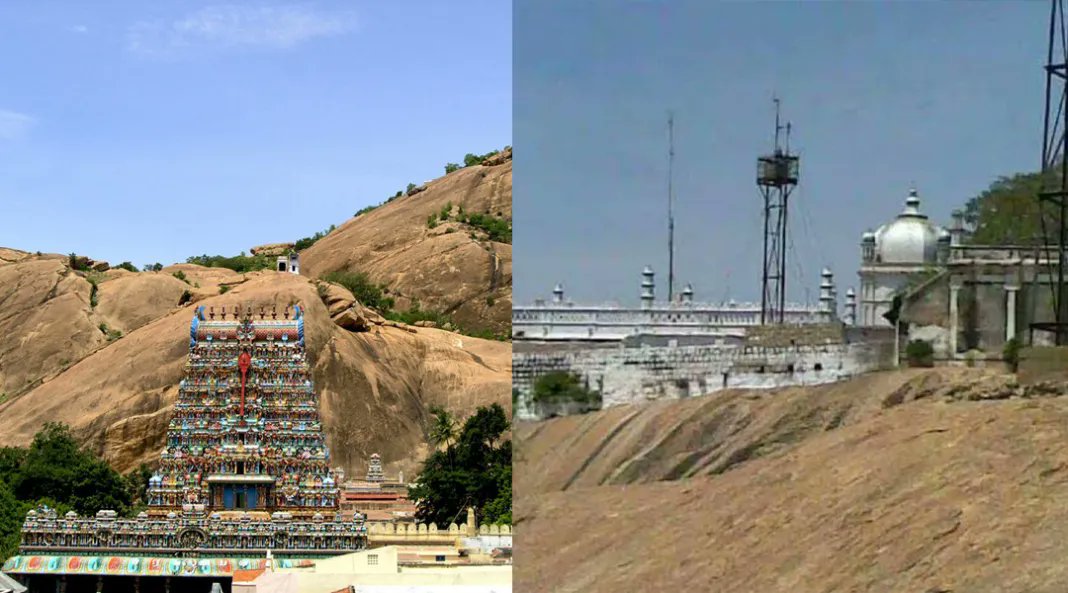
The Tamil Nadu Waqf Board has approached the Madras High Court claiming that the Deepastambam (lamp pillar) situated on Thirupparankundram Hill forms part of the Sikandar Badusha Dargah and therefore constitutes Waqf property. This assertion raises serious legal, historical, and constitutional concerns that cannot be viewed merely as a routine property dispute.
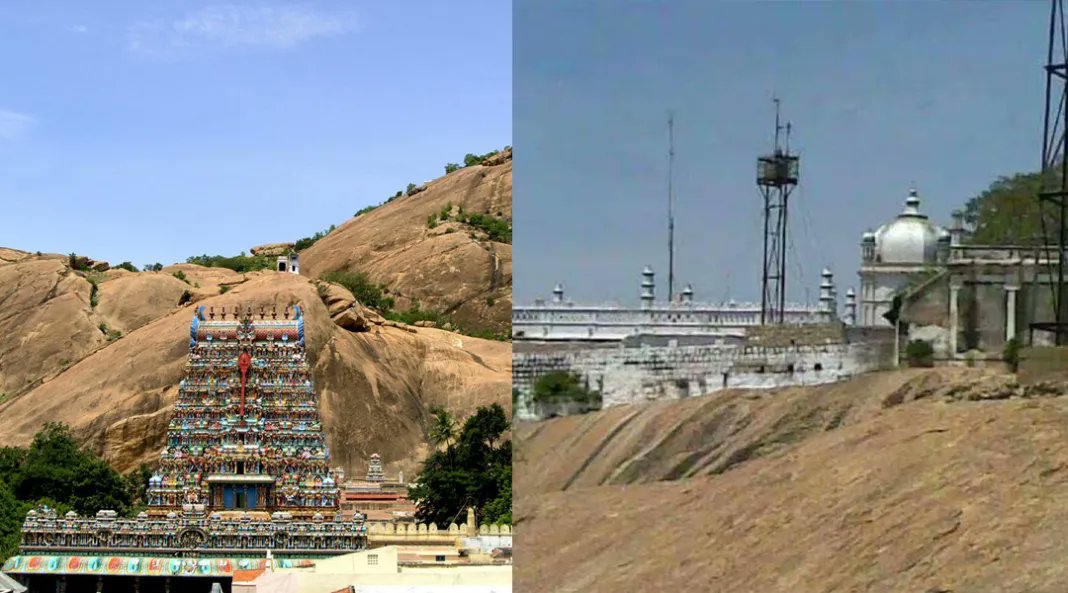
The Arulmigu Subramaniya Swamy Temple, Thirupparankundram, is one of Tamil Nadu’s most ancient Hindu temples, with well-documented scriptural, historical, and cultural significance. The hill itself has been revered as a sacred Hindu site for centuries, forming an inseparable part of Hindu worship and religious life. Any later structure or administrative claim cannot negate, override, or supersede the established Hindu religious character of the hill.
A Fundamentally Flawed Premise
The Waqf Board’s claim rests on a flawed understanding of Hindu religious geography. In Sanatana Dharma, the sanctity of a temple does not end at the walls of the shrine. Hills, hilltops, circumambulatory paths, ritual access routes, and sacred markers such as Deepastambams are integral to worship and religious practice.
For Hindus, Thirupparankundram Hill is a unified sacred landscape, not a collection of divisible parcels or isolated structures. Attempts to classify individual elements on the hill as Waqf property effectively seek to fragment a living Hindu religious site, undermining its religious continuity and civilizational integrity.
Impact on Hindu Religious Practice
The presence of the dargah has, over time, resulted in restrictions on Hindu religious practices, particularly during festivals and rituals that require unhindered access to the hilltop and associated sacred spaces. While administrative accommodation between communities is permissible, it cannot lawfully result in the dilution or subordination of Hindu religious rights at a site that is intrinsically and historically Hindu.
Constitutional Safeguards Cannot Be Ignored
From a constitutional perspective, the issue is clear.
- Articles 25 and 26 of the Constitution of India guarantee the right to freely practice religion and allow religious denominations to manage their own religious affairs. These protections extend not only to temples as buildings, but also to sacred geography and integral ritual spaces, including temple hills and Deepasthambham.
- The Supreme Court’s landmark judgment in Commissioner, Hindu Religious Endowments v. Sri Lakshmindra Thirtha Swamiar of Shirur Mutt (1954) clearly held that while the State may regulate secular administration, it cannot interfere with essential religious practices or fragment sacred religious spaces.
Any attempt to carve out portions of a historically sacred Hindu hill and reclassify them as Waqf property runs directly contrary to this settled constitutional position.
Thirupparankundram Is Indivisibly Sacred
The Global Hindu Human Rights Collective (GHHRC) reiterates that Hindu religious claims are not confined to temple premises or individual structures. For Hindus, the entire Thirupparankundram Hill is sacred.
The placement of deities on hilltops and temples at the foothills is a core, non-negotiable feature of Sanatana Dharma, rooted in scripture, lived practice, and civilizational history. This sacred geography cannot be fragmented by administrative reclassification or selective property claims.
Any effort to reclassify parts of this sacred landscape as Waqf property is not merely a legal disagreement. It directly impacts Hindu religious continuity, access, worship, and heritage.
GHHRC will continue to advocate lawfully and constitutionally for the protection of Hindu sacred spaces, religious practices, and civilizational rights, ensuring that history, faith, and constitutional guarantees are neither diluted nor erased.